
DATA OWNERSHIP & TECHNICAL AGENCY

When a professional owns their infrastructure, they own their own time.

Work Aloha helps professional offices organize business information, develop locally managed workflows, and reduce unnecessary dependence on fragmented cloud-based processes.
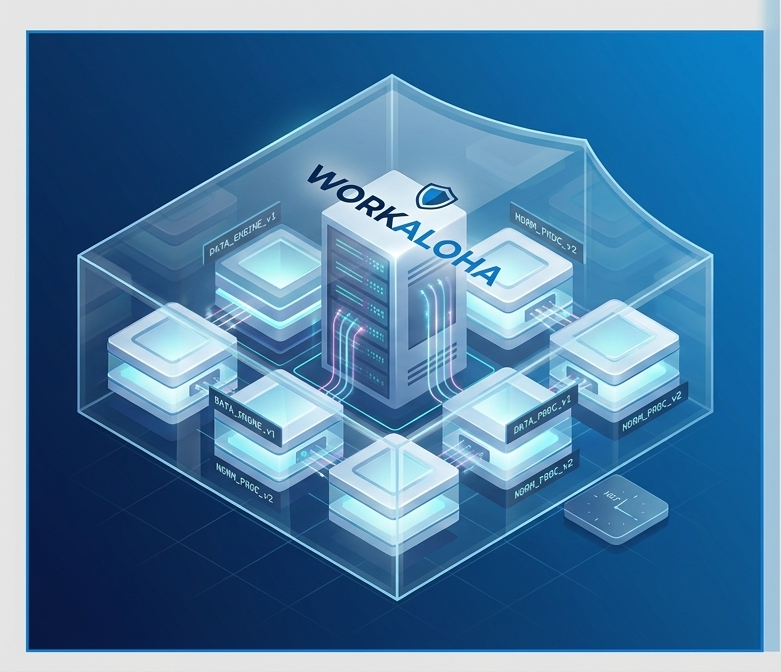
home_image_placeholder_02
WHAT CAN WORK ALOHA DELIVER FOR YOUR BUSINESS?

The Benefits of Taking Control of Your Business Information

Our experience developing locally managed systems has shaped a practical approach to organizing business information, improving everyday workflows, and reducing unnecessary dependence on outside platforms.

Greater Control

OVER YOUR BUSINESS RECORDS
Keep business information organized and accessible through locally managed datasets and reporting processes. Our approach emphasizes maintaining usable records beyond the limitations of individual software interfaces, giving your office greater control over its information.

Simpler Workflows

LESS ADMINISTRATIVE REDUCTION
Reduce repetitive tasks and the need to move between disconnected software interfaces. By bringing related information into organized workflows, businesses can spend less time searching for records and more time focusing on the work that matters.

More Independence

FROM SOFTWARE PLATFORMS
Reduce reliance on individual vendors for accessing and reviewing historical business information. Locally managed records and reusable reporting processes provide greater flexibility while allowing businesses to continue using external services where needed.

When Business Information Is Fragmented, Your Workflows Become More Complicated

Cloud-based applications provide valuable services, but relying on disconnected platforms can make it difficult for professional offices to maintain organized records, consistent workflows, and control over their business information.
FRAGMENTED INFORMATION
When business records are scattered across multiple platforms, maintaining consistent information can require repetitive exports, manual reconciliation, and additional administrative work.
LIMITED CONTROL OVER RECORDS
When historical information is accessible primarily through a provider's interface, changes to software features, account access, or subscription terms can affect how businesses retrieve and review their records.
WORKFLOWS DEFINED BY SOFTWARE
Standardized applications may not accommodate every office's operational needs, requiring professionals to adapt their processes to available features rather than designing workflows around how they actually work.
ONGOING PLATFORM DEPENDENCY
Subscription-based services can create recurring costs and operational dependencies. Without independent copies of important business records, moving between providers or changing systems can becomes more complicated.
SPECIALIZED WORKSPACE SOLUTIONS

Build an Infrastructure That Works for Your Business

Work Aloha's approach combines locally managed information systems with practical processing workflows, helping professional offices maintain greater control over their records and how they use them.

The Engine

Establish Your Foundation
for Data Ownership

The Engine focuses on establishing locally managed workflows for collecting, organizing, and maintaining business information. By creating structured records and reducing reliance on disconnected software interfaces, offices can build a more consistent foundation for their everyday operations.

  • Locally managed business records and data workflows
  • Structured organization of information from external platforms
  • Greater control over access to historical records
  • Reusable processes for maintaining business information
  • Reduce dependence on individual software interfaces

The Processor

Turn Organized Information
Into Practical Business Tools

The Processor builds on The Engine by transforming organized information into useful outputs, reporting processes, and interfaces designed around specialized office needs. Rather than relying exclusively on standardized software features, businesses can develop workflows that better reflect how they operate.

  • Builds upon The Engine's organized data foundation
  • Normalizes information from multiple sources into consistent datasets
  • Produce reports and outputs tailored to business needs
  • Supports customized internal workflows and interfaces
  • Improves the usability of locally maintained business information
SHIFT FROM FRAGMENTATION TO GREATER CONTROL

Data Ownership as Infrastructure

See how a locally managed approach can change the way professional offices organize, access, and use their business information
Default Experience
The Work Aloha Approach
Business records are distributed across multiple platforms, making it difficult to maintain a consistent, unified view.
Information from different sources can be organized into structured, locally managed datasets for more consistent access and review.
Access to historical information and reporting tools often depends on third-party software interfaces and account availability.
Locally maintained records provide an additional way to access and review business information without relying exclusively on a provider's interface.
Different software systems may use inconsistent formats, requiring additional effort to reconcile information.
Information can be standardized into consistent formats that support reporting, organization, and internal workflows.
Subscription-based tools can introduce ongoing expenses and dependencies that continue as long as the services are needed.
Locally managed tools and reporting processes can reduce dependence on certain recurring software services while supporting continued use of necessary external platforms.
Businesses may have limited insight into how information is organized, retained, or made available within third-party systems.
Maintaining independent business records can provide clearer insight into stored information, processing workflows, and internal record management.
Generic software interfaces may require businesses to adapt their processes to predefined features and limitations.
Locally managed processing tools and custom outputs can be designed around the operational requirements of individual offices.
Disconnected systems and reliance on external interfaces can introduce unnecessary administrative steps and workflow interruptions.
Organized data, reusable processes, and locally managed tools can help businesses reduce administrative friction and develop more flexible workflows.
THE SHIELDED ENVIRONMENT FRAMEWORK

A Structured Approach to Greater Data Control

Work Aloha's four-stage framework provides a practical approach to evaluating existing software dependencies, developing locally managed infrastructure, and establishing more independent business information workflows.
1

Discovery

Understand Your Current Information Environment
We begin by examining how business information moves through existing applications, identifying fragmented records, repetitive administrative tasks, and dependencies on external software platforms.

This assessment helps establish priorities for improving data organization, accessibility, and workflow efficiency.
2

Architecture

Designed Your Localized Information Framework

We define how information will be collected, organized, processed, and presented using three complementary components:

  • The Engine: Establishes locally managed data collection and organization.

  • The Processor: Normalizes information and transforms it into structured outputs.

  • The Interface: Presents information through reporting tools and workflows suited to business needs.

Together, these components provide a framework for managing business information beyond individual software interfaces.


3

Hardening

Strengthen Reliability, Access, and Data Management

We evaluate the infrastructure, storage practices, access controls, and operational processes supporting the localized environment.

Where appropriate, offline-access testing helps identify which records and functions remain available during network interruptions and which still require external services.

The objective is to improve resilience, maintainability, and control without assuming that every operation can function independently of the internet.


4

Transition

Introduce Localized Workflows Alongside Existing Systems

We integrate locally managed records and processing workflows with the business's existing software environment.

Rather than requiring an immediate replacement of cloud applications, this approach allows offices to maintain necessary online services while establishing independent copies of selected business information and reusable local reporting processes.

The result is a more flexible foundation for managing information as operational needs evolve.

WORK ALOHA DIGITAL TOOLKITS

Put Greater Data Control Into Practice

Explore downloadable tools designed to help professional offices organize business information, maintain locally managed records, and develop practical reporting workflows.

Purpose-Built Tools

Address specific business information management tasks with downloadable resources designed around practical operational needs.

Locally Managed Outputs

Generate structured datasets and reports that can be maintained within your own business information environment.

Purchaser-Controlled Configuration

Configure your own accounts, credentials, file locations, and operating settings to suit your workplace requirements.

Practical Implementation Resources

Use supporting documentation and reference materials to understand setup requirements, operate your tools, and maintain your reporting workflows.
EXPLORE WORK ALOHA DIGITAL TOOLKITS

Practical Tools. Greater Control. Your Business.

Discover downloadable digital toolkits designed to help professional offices organize business records, develop locally managed workflows, and create useful reporting outputs.
Explore our growing collection of self-configured tools and find resources that support your business information management needs.

Is a Shielded Environment Right for Your Business?

Every professional office has different operational requirements. Work Aloha's Shielded Environment approach is designed for organizations seeking greater control over their business information, workflows, and supporting infrastructure.

A Shielded Environment May Be Right for You If...

  • You want greater control over how your business information is collected, organized, and maintained.
  • You rely on multiple software platforms and want to reduce unnecessary fragmentation.
  • You need workflows that better reflect your office's actual operational requirements.
  • You want to maintain locally managed records alongside your existing cloud services.
  • You recognize the value of planning, documentation, and long-term infrastructure maintenance.
  • You are interested in developing greater operational independence over time.

A Different Approach May Be Better If...

  • Your current software platforms already meet your operational requirements.
  • You prefer fully hosted solutions with minimal local configuration or maintenance.
  • You do not need independent local copies of your business records.
  • Your organization is not currently prepared to manage additional infrastructure responsibilities.
  • You need an immediate deployable solution without a discovery or configuration process.
  • You are looking for a single-purpose tool rather than a broader information management framework.
TAKE THE NEXT STEP WITH WORK ALOHA

Own Your Infrastructure. Take Control of Your Information.

Build a more organized and independent approach to managing business information. Explore Work Aloha's practical digital tools, localized workflows, and infrastructure strategies designed to give professional offices greater control over their records and operations.